Intraday Trading Courses
Explore intraday trading courses designed to help you master market analysis, risk management, and disciplined trade execution.
44 courses
29 instructors
98,590+ learners
4.7 average rating




Intraday Trading
Best intraday trading courses in India
Intraday trading is the most marketed and least understood style of trading in India. Every YouTube ad promises ₹5,000 a day. Every coaching institute claims to "make you a professional intraday trader." Yet SEBI data is clear: over 70-80% of intraday traders lose money. Not occasionally. Every single year.
This is not because intraday cannot be profitable. It can be, for a small minority. The reason most intraday traders fail is that they jump into it expecting daily income, without learning the process, without managing risk, and without the emotional discipline the style demands.
Our intraday trading courses are honest about what intraday is and what it is not. It is not a job. It is not guaranteed daily income. It is one of the hardest, most psychologically demanding ways to make money in the markets. The courses on this page are built to give you the realistic process, the proven setups, and the mental framework needed to be in the small minority that actually succeeds.
Why most intraday traders lose money
The patterns are predictable. Look at any group of new intraday traders and you will see the same mistakes repeating.
They trade without a plan. No watchlist. No entry rules. No stop loss. They open the chart at 9:15, see something "moving," and click buy. By 11:30 they are down 2%. By 2:30 they have revenge-traded their way to 5% down.
They take too many trades. The screen is open all day. They feel they must "use" the day. They take 10-15 trades trying to catch every move. Costs alone eat their account, even before accounting for losses.
They have no stop loss. "I will exit when it bounces." It does not bounce. By the time they accept the loss, it is much bigger than it should have been. One bad trade undoes the work of five good trades.
They average down. A losing trade hits stop level. Instead of exiting, they add more "because it is now cheaper." This works in long-term investing on fundamentally strong companies. It is fatal in intraday, where the trade is purely technical and the stop is the only protection.
They revenge-trade after a loss. After a loss, they immediately take another trade to "make it back." This trade is emotional, not planned. It usually loses too. Now they take a bigger trade. The spiral begins.
They trade on tips and YouTube calls. Real-time tips look exciting but rarely work. By the time you see the call, place the order, and get filled, the move is already partly over. Your stop gets hit before the target.
They have unrealistic expectations. Influencers showing daily profits create the illusion that intraday is fast and easy. The reality is that even good intraday traders have losing days, losing weeks, sometimes losing months. They survive because of position sizing, not because they win every day.
They use too much leverage. Brokers offer 5x, 10x intraday leverage. New traders use the maximum available. A 1% move against them becomes a 5-10% account hit. One bad day can erase weeks of work.
If you see yourself in any of these, the path forward is the same. Proper learning, written rules, strict discipline, and patience.
What you will actually learn
Our intraday trading courses give you the complete process. Before market open, during the day, after market close. The full system.
Pre-market preparation. What to do before the market opens. How to check global cues. How to scan for stocks in news, results, breakouts, and gappers. How to build a daily watchlist of 3-5 stocks to focus on.
Opening range setups. The first 30-45 minutes of the market are the most active. We cover specific setups for the opening range: breakouts, fakeouts, fade trades, and reversal patterns.
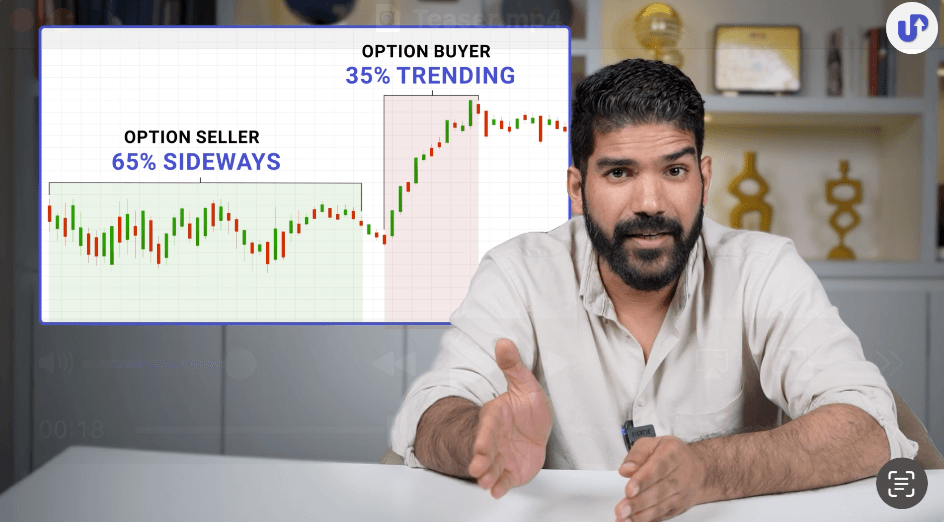
Trend day vs sideways day. Some days the market trends strongly. Other days it ranges. You will learn to identify the type of day early and apply the right strategy. Using the wrong approach on the wrong day is one of the main reasons traders fail.
Stop loss placement. Where exactly to put your stop. Tight enough that losses stay small. Wide enough that random noise does not hit you. The courses cover multiple methods, each with their right use case. Our [technical analysis courses](https://www.upsurge.club/courses/technical-analysis) provide the chart-reading foundation that makes proper stop placement possible.
Risk per trade and per day. Never risking more than 1% per trade. Never risking more than 3% per day. These are the rules that keep you in the game. Most intraday traders violate them and pay the price.
Position sizing with leverage. Leverage is available, but using it wisely is what separates pros from amateurs. We cover how to size with leverage so you never blow up on one bad trade.
Knowing when to stop. This is the most important lesson. After two losses, you stop. After a daily loss limit is hit, you stop. After a winning streak, you stop before greed takes over. Successful intraday traders are great at stopping. Bad ones cannot.
Trade journaling and review. What you did right. What you did wrong. Which setups worked. Which did not. Without this review, you repeat mistakes forever. The courses give you a simple journaling template you can use daily.
The emotional side. Intraday is more psychological than technical. Fear, greed, revenge, FOMO. We cover how to recognise and handle each. Pair these courses with our [trading psychology courses](https://www.upsurge.club/courses/trading-psychology) for deeper coverage.
Realistic time and capital expectations
Intraday trading needs the morning hours and the last 30 minutes seriously. Roughly 2 to 3 hours of focused attention. The middle of the day is usually low quality and is best avoided.
Capital-wise, ₹50,000 to ₹1 lakh is a practical minimum. Less than this makes it hard to absorb costs and losses. Less than ₹25,000 is generally not recommended.
If you have a job that requires meetings during market hours, intraday will be very difficult. Most people with jobs are better off in our [swing trading courses](https://www.upsurge.club/courses/swing-trading) where positions are held for days.
Who intraday trading is for
Intraday is for full-time traders, near-retirees with free time during market hours, students with a flexible schedule, and a small number of working professionals whose jobs allow market-hour attention. It needs focus, discipline, and the ability to handle losses without spiralling.
It is not for beginners who have never traded. It is not for people with full-time jobs that demand morning attention. It is not for those who cannot accept a loss instantly.
If you are new to trading entirely, start with our [stock market courses for beginners](https://www.upsurge.club/courses/stock-market-basics) and build a base before attempting intraday.
For Hindi learners, intraday concepts are also covered in our [stock market courses in Hindi](https://www.upsurge.club/courses/stock-market-in-hindi).
Who teaches our intraday courses
The instructors are full-time intraday traders. Many SEBI-registered. They have done this for 10, 15, 20+ years. They have lived the daily P&L swings, the streaks, the drawdowns, and the recoveries. When they teach you a setup, they have used it themselves with their own money in Indian markets.
All material is built for Indian intraday. NSE stocks. Indian taxation. Indian brokerage structures. Realistic margins. Realistic results. Nothing translated from US day trading content that does not directly apply.
How the courses are structured
Online and self-paced. Most intraday courses take 3 to 5 weeks to complete. After the course, real practice with small position sizes for at least 3-6 months is what actually develops skill.
Courses start from just ₹199. Upsurge.club PRO gives you access to 70+ courses and free live webinars. Every course comes with a signed completion certificate from the instructor.
For deeper structured learning, our [recorded mentorship programs](https://www.upsurge.club/courses/mentorship-programs) cover intraday extensively over a longer period with a complete curriculum.
Frequently asked questions about intraday trading
How much capital do I need to start intraday? ₹50,000 to ₹1 lakh is a practical minimum. Smaller capital is hard to make work because costs and stop losses take a bigger percentage.
How many hours a day do I need to trade? Roughly 2 to 3 hours, mostly the opening and closing portions of the session.
Will I get daily trade calls? No. The courses teach you to find your own trades. Tip-based trading is one of the main reasons traders fail.
Can I do intraday with a job? Very difficult, unless your job allows full attention during market hours. Most working professionals are better off with swing trading.
What about taxes on intraday profits? Intraday equity trading is treated as speculative business income. The framework is covered briefly. For full tax planning, see our [personal finance courses](https://www.upsurge.club/courses/personal-finance).
How much can I expect to earn? Avoid setting absolute earnings targets. Focus on consistency and risk discipline. The earnings follow the process.
Should I trade stocks or index futures or options intraday? Each has its place. Stocks for variety. Index futures for liquidity. Options for capital efficiency. See our [options trading courses](https://www.upsurge.club/courses/options-trading) for option-specific intraday.
How is intraday different from scalping? Scalping targets very small moves over very short timeframes. Intraday targets larger moves over longer parts of the session. See our [scalping trading courses](https://www.upsurge.club/courses/scalping-trading) for that style.
What changes when you intraday trade properly
The first thing that changes is your relationship with losses. You stop seeing each loss as a personal failure. You start seeing it as part of doing business. A 1% loss is a normal Tuesday. You take it, walk away, and come back tomorrow without baggage.
The second thing is your trade count. You stop taking 15 trades a day and start taking 2-4 high-quality trades. Your costs drop. Your concentration improves. Your win rate rises because each trade now has a proper plan.
The third thing is your account curve. Instead of the up-and-down whiplash that most intraday traders experience, you start seeing a slow, steady upward drift. Some weeks are flat. Some are down. But the overall trajectory turns positive.
This is what intraday trading done properly looks like. Not the YouTube fantasy of daily ₹10,000 wins. The realistic version of a craft that, when done right by a disciplined trader with the right temperament, can produce meaningful income alongside high risk.
If you want to attempt it seriously, pick a course from the list above. Start small. Learn the process. Review every trade. Give it six months before judging results. The traders who survive that first six months with discipline intact are the ones who go on to build real intraday careers.