Trading Strategies Courses
From technical indicators to advanced options trading strategies, these comprehensive courses offer expert insights from India's top traders. Master these stock market trading strategies to improve your trading skills.
207 courses
84 instructors
605,005+ learners
4.7 average rating



























































































































Who are our trading strategies courses for?
Traders who don't have a written strategy and trade on tips or gut feeling
Traders who change their strategy every week after a couple of losses
Traders who use the same setup in trending and sideways markets and wonder why it fails
Traders who enter trades but have no plan for stop loss or target
Trading Strategies
Best courses in India teaching proven and tested trading strategies from experts
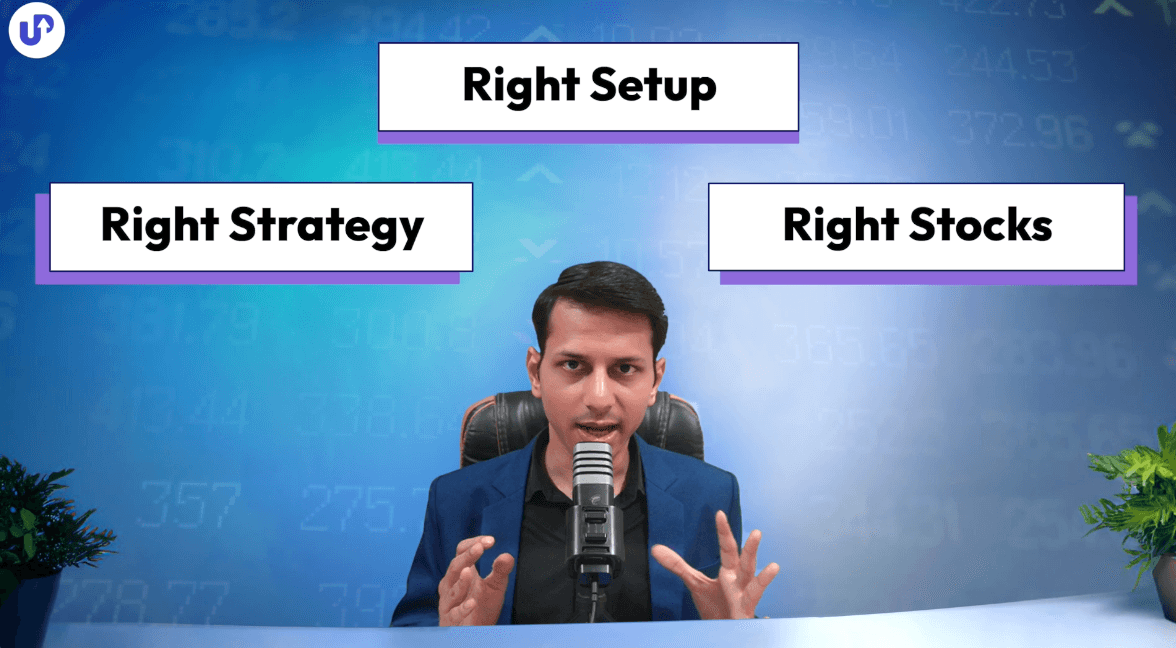
Every trader, at some point, goes through the same phase. They try one strategy. It loses twice. They drop it and search for another. The second one loses three times. They drop that too. Soon they have a folder full of half-learned setups, none of which they have actually given enough time or trades to prove. They are stuck on what traders call the "strategy hunt." Always looking for the perfect setup. Never finding it. Never making money.
The truth nobody likes to hear is that no strategy works every time. Even the best traders in the world have win rates between 40% and 60%. What separates them from the rest is not the strategy itself. It is discipline, position sizing, and the patience to give one approach enough trades to play out.
Our trading strategy courses are built around this idea. We do not promise magical setups. We give you complete, tested blueprints with clear rules, so you can stop hopping between strategies and start mastering two or three that actually fit your personality.
Why most traders fail at strategy
Most traders fail at trading strategies for reasons that have nothing to do with the strategy itself.
They change strategies after two or three losses. Two losses do not invalidate a strategy. Even a strategy with 60% win rate can have four losses in a row sometimes. That is normal. But traders who panic at the second loss never give any setup enough trades to actually work.
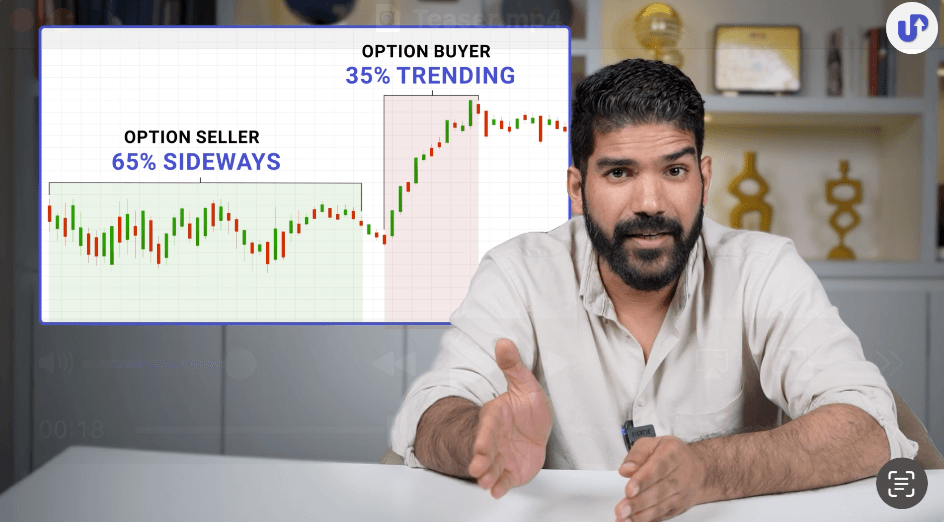
They use the same setup in every market. A breakout strategy works brilliantly in a trending market. It gets destroyed in a sideways market. A mean reversion strategy is the opposite. Most traders pick one and stubbornly apply it everywhere, then blame the strategy when results are inconsistent.
They do not have written rules. Ask a losing trader to explain their strategy in writing. Most cannot. They say things like "I buy when it looks strong." That is not a strategy. That is a feeling. A real strategy has specific, written rules for entry, stop loss, target, and trade management.
They ignore position sizing. Even a good strategy will blow up your account if you risk 20% per trade. Position sizing is the most overlooked part of strategy. You should never risk more than 1% to 2% of capital on a single trade.
They never backtest. Most traders trade on hope. The few who succeed do basic backtesting, even manually, to see how their strategy would have performed over the last 100 trades. Without this, you are flying blind.
If you see yourself in any of these patterns, the issue is not your strategy. It is the way you are using it.
What you will actually learn
Our trading strategy courses give you complete trade blueprints. Not vague ideas. Specific rules. Entry trigger. Stop loss placement. Target setting. When to trail. When to skip the trade entirely. By the end, you should be able to write your strategy on a single page and follow it without second-guessing.
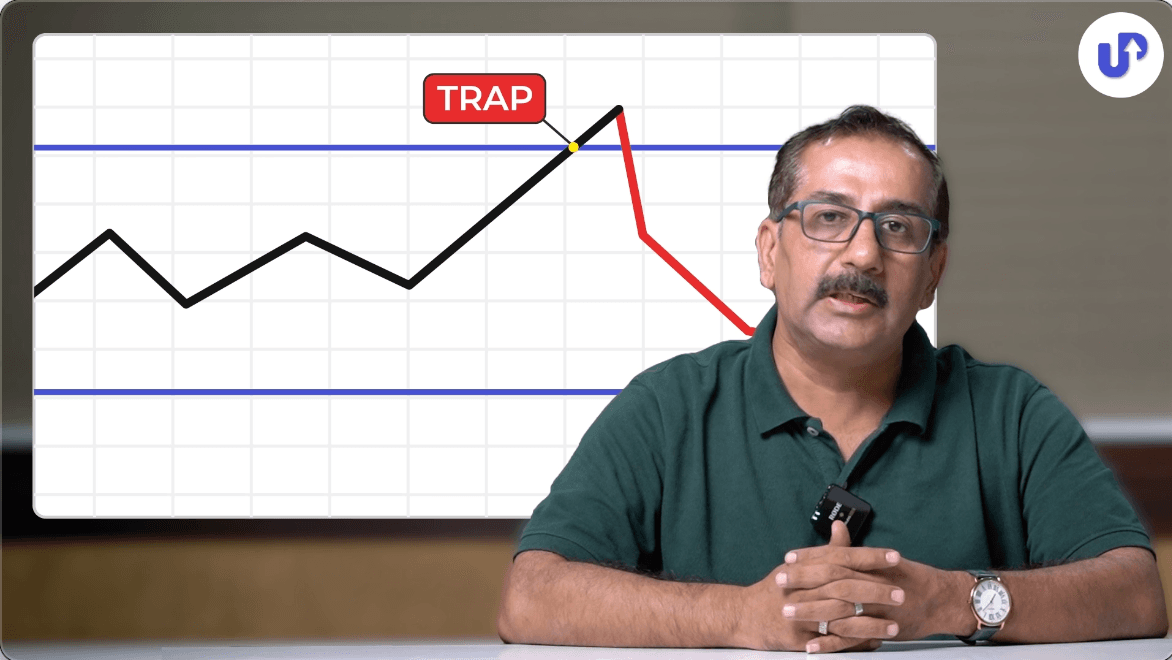
Breakout strategies. How to identify real breakouts and avoid the fake ones. Volume confirmation. Pre-breakout setup characteristics. Stop placement. Target calculation. When breakouts work and when they do not.
Pullback strategies. Trends rarely move in a straight line. They pull back, then continue. Pullback strategies catch these continuation moves with lower risk than chasing breakouts. You will learn the exact conditions for a tradable pullback and how to filter the bad ones.
Mean reversion setups. Range-bound markets need a different approach. Mean reversion buys oversold conditions and sells overbought ones. You will learn how to identify ranges and when reversion setups have the highest probability.
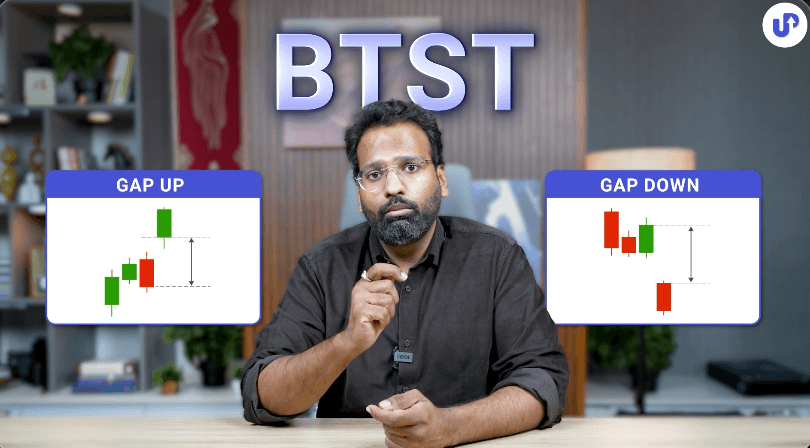
Gap trading. Gap-up and gap-down openings create opportunities every morning. You will learn the four types of gaps, which ones to trade, which to fade, and which to ignore entirely.
Position sizing and risk management. Every strategy comes with proper position sizing rules. How many shares to buy. How wide a stop. How to scale in and out of trades. This is the part that decides whether you survive long-term or blow up early.
Strategy selection by market condition. Trending markets need breakout and pullback strategies. Sideways markets need mean reversion. Volatile markets need wider stops and smaller sizes. You will learn how to read the market condition and pick the right tool for it.
Manual backtesting. Before risking real money on any strategy, you should test it on past charts. We show you a simple, no-code method to backtest manually so you can validate any setup before going live.
For the technical chart-reading skills that power most strategies, pair your learning with our technical analysis courses. For options-specific strategies like spreads, straddles, and iron condors, see our options trading courses.
If you are a new trader
If you are new, the strategy courses on this page assume you already know basic chart reading. If you do not, start with a technical analysis course first. Once you can read trend, levels, and candles, the strategy courses give you the playbook to actually trade.
We recommend new traders pick one strategy and stick with it for at least 50 trades before judging it. This is the only way to know whether the strategy works for you. Most traders never reach 50 trades on any single setup because they switch too fast.
If you also need to build up your stock market basics, see our stock market courses for beginners.
If you are already trading
Active traders use these courses to expand their playbook. Maybe you already have one strategy that works in trending markets. You can add a mean reversion approach for sideways markets, or a gap strategy for the opening hour. The goal is to be ready for any market condition, not to be helpless when the market does not fit your usual setup.
Active traders also benefit from journaling, reviewing past trades, and improving discipline. Our trading psychology courses cover the mental side of strategy execution, which is where most traders actually fail.
For traders who want a complete, structured curriculum rather than individual short courses, look at our recorded mentorship programs. These cover strategy, psychology, and portfolio management in one deep program.
Who teaches our strategy courses
The instructors on Upsurge.club are full-time traders. Many are SEBI-registered. They have traded these exact strategies with their own capital in Indian markets. They have seen them work, fail, and adapt across different market cycles. When they teach you a setup, it is not from a textbook. It is from their actual trading screen.
Every strategy is built for Indian markets. Examples are from Nifty, Bank Nifty, and Indian stocks. Tax rules, brokerage costs, and slippage are factored in. None of these are translated from US strategy books that do not work the same way here.
How the courses are structured
The courses are online and self-paced. Watch when you have time. Most learners finish a single strategy course in 2 to 3 weeks. The complete strategy journey, covering multiple setups across market conditions, takes around 2 to 3 months if you are serious.
Courses start from just ₹199. Upsurge.club PRO gives you access to 70+ courses across categories along with free live webinars. Every course comes with a signed completion certificate from the instructor.
You can also explore strategy applications in specific styles: intraday trading courses for day setups, swing trading courses for multi-day moves, scalping trading courses for quick scalps, and commodity trading courses for MCX gold, silver, and crude.
Frequently asked questions about trading strategies
How many strategies should I learn? Two or three is enough. More than that becomes confusing. Pick one for trending markets, one for sideways markets, and optionally one for volatile days. Master these instead of collecting dozens.
Can I backtest these strategies without coding? Yes. The courses show you a simple manual backtesting method using past charts and a basic spreadsheet. No coding needed.
Will the strategies work in sideways markets? Some will, some will not. That is why you need different strategies for different conditions. The courses cover this explicitly.
Will I get specific stock recommendations? No. The courses teach you how to scan and select stocks yourself based on each strategy's rules. Tip-based trading is one of the main reasons traders fail.
Is this suitable for working professionals? Yes. Swing and positional strategies need only 30 to 45 minutes a day, mostly after market hours. Intraday strategies are harder to manage with a job.
Should I learn fundamentals along with strategies? It depends on your time horizon. For short-term trading, strategy and chart reading matter most. For long-term investing, fundamentals dominate. Our stock market investing courses cover the fundamental side.
What changes when you have proper strategies
The biggest change is mental peace. When you have written, tested rules, every trade becomes a calm decision instead of an emotional gamble. You know when to enter. You know when to exit. You know when to do nothing. The constant background anxiety of "did I do the right thing" reduces dramatically.
Your account also stops the slow bleed. With proper position sizing and tested setups, losing trades become small and recoverable. Winning trades become bigger because you stop exiting too early. The path from loss-making to consistent stops being a mystery and becomes a process.
Stop hunting for the holy grail. Pick a strategy course from the list above. Commit to learning it for 50 trades. Track your results in a journal. You will discover that the strategies you already had were fine. The problem was never the strategy. It was how you were using it.