Commodity Trading Courses
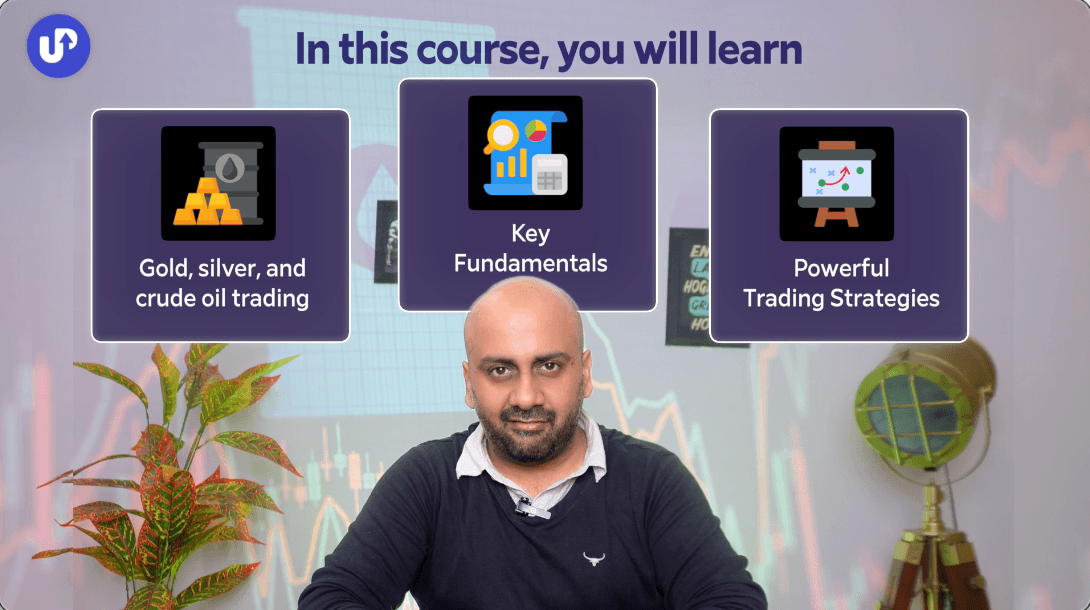
Master the fundamentals of commodity markets and build profitable trading strategies for gold, silver, and crude oil.
6 courses
5 instructors
12,452+ learners
4.7 average rating
Commodity Trading
Best commodity trading courses in India for mastering MCX gold, silver, and crude
Commodity trading on MCX has its own rhythm. It is not equity. The drivers are different. Crude oil moves on OPEC decisions, inventory reports, and geopolitical headlines. Gold moves on dollar strength, real interest rates, and central bank buying. Silver behaves like both an industrial metal and a precious metal, making it tricky. Natural gas moves on weather, storage, and supply data. Each commodity has its own personality, and most traders who jump into MCX without understanding this end up frustrated and out of capital quickly.
The lure of commodity trading is real. Lower correlation with equity. 24-hour exposure (some commodities trade till 11:30 PM). High leverage. Big moves on news events. For traders who understand these markets, MCX can be a profitable addition to their trading. For those who do not, it becomes another way to lose money quickly.
Our commodity trading courses are built specifically for Indian MCX traders. The content covers how commodities actually move, how to read global cues that drive Indian commodity prices, how to apply tested strategies like Turtle Trading to Indian commodities, and how to manage the unique risks of this market including overnight gaps and event volatility.
Why most commodity traders lose money
The mistakes commodity traders make are different from equity traders. Some are unique to the commodity market structure.
They trade commodities like stocks. A trader uses the same setups they use on Nifty. They ignore that crude reacts to inventory data Wednesday evening, that gold moves on US dollar moves overnight, that natural gas swings 5% on a weather forecast. Without commodity-specific knowledge, equity strategies underperform here.
They ignore global cues. Indian commodity prices are heavily influenced by international prices. NYMEX crude, COMEX gold, dollar index movements, LME copper. Traders who only watch MCX charts miss the underlying drivers and get blindsided by overnight moves.
They underestimate event risk. OPEC meetings. Fed decisions. Inventory data releases. Geopolitical events. Commodity prices can move 3-5% in minutes on news. Traders holding positions through these events without hedging or risk awareness get hurt.
They get caught by overnight gaps. MCX has long trading hours but still has gaps. International events overnight can produce 2-3% gap openings. Equity-style stop losses do not protect against gaps. Position sizing must account for this.
They overuse leverage. MCX offers significant leverage. New traders use the maximum. A 1% move against them with 10x leverage means 10% account loss. Repeated leverage misuse blows up accounts quickly.
They confuse correlations. Gold and silver are not the same. Crude and natural gas are not the same. Many traders treat correlated commodities as identical, then get surprised when one moves up while the other moves down.
They have no edge in commodities. They simply gamble. They trade based on news headlines, tips, or random feelings. Without a tested strategy, the commodity market eats them alive.
What you will actually learn
Our commodity trading courses cover the practical realities of MCX trading.
How each commodity behaves. Gold's relationship with the dollar. Silver's dual nature as industrial and precious metal. Crude's sensitivity to inventory data and OPEC decisions. Natural gas's weather and storage drivers. Copper as an economic indicator. The character of each commodity, with examples from real MCX history.
Global cues that drive Indian commodities. NYMEX, COMEX, LME, dollar index, treasury yields. How to interpret these in real time and predict MCX opening behaviour. Why an overnight oil rally usually leads to MCX crude gapping up the next morning.
Turtle Trading applied to commodities. The classic Turtle Trading strategy, adapted for Indian commodities. This is one of the most well-tested trend-following systems in trading history, and it works particularly well in commodities. Our dedicated Turtle course teaches the complete system applied to MCX.
Inventory data and event trading. How to read EIA crude inventory reports. How to position before and after OPEC meetings. When to trade events and when to step aside. The framework for handling high-volatility news days.
MCX margins, lot sizes, and contract specs. Each commodity has different contract sizes. Margin requirements change. Expiries are different. The courses cover the practical specs you need to know to trade without surprises.
Position sizing for commodities. Account for higher volatility. Account for gap risk. Account for leverage. Position sizing in commodities is more nuanced than in equities, and getting it wrong is the fastest way to blow up.
Intraday and positional commodity strategies. Both are covered. Some traders do quick intraday moves on crude during US session. Others hold gold positionally for weeks. Different styles, different setups, all covered.
Commodity options. MCX offers options on some commodities. We cover the basics of commodity option trading for those interested in this newer market.
For broader trading skills that complement commodity knowledge, see our [trading strategies courses](https://www.upsurge.club/courses/trading-strategies) and [technical analysis courses](https://www.upsurge.club/courses/technical-analysis).
Who should trade commodities
Commodity trading suits traders who can handle higher volatility, who can manage overnight gap risk, and who can stay engaged during US market hours when global commodity prices are most active. It is especially useful for traders looking to diversify beyond equity and find markets that are not correlated to Nifty.
It is less suitable for new traders who are still learning basics. Build a foundation in equity trading first via our [stock market courses for beginners](https://www.upsurge.club/courses/stock-market-basics) or [intraday trading courses](https://www.upsurge.club/courses/intraday-trading), then add commodities.
Working professionals can trade commodities, especially in the evening session (3:30 PM to 11:30 PM) which aligns with US trading hours. This is one of the unique appeals of commodity trading for those with day jobs.
For Hindi learners, several commodity concepts are also covered in our [stock market courses in Hindi](https://www.upsurge.club/courses/stock-market-in-hindi).
Capital and broker requirements
A reasonable starting capital for MCX commodities is ₹50,000 to ₹1 lakh. With proper position sizing, you can take small positions in gold mini, silver mini, and crude mini contracts. Larger lot sizes need more capital.
A broker with good MCX execution is important. The courses discuss what to evaluate without recommending specific brokers.
Who teaches our commodity courses
The instructors are full-time commodity traders with 10-19+ years of experience. They trade their own capital on MCX every single day. They have lived through crude crashes, gold rallies, silver squeezes, and natural gas spikes. The strategies they teach are the ones they actually use.
All material is built for MCX specifically. NYMEX and COMEX are referenced as global drivers, but the trading takes place on MCX with MCX contract specs, MCX timings, and Indian taxation. Nothing translated from US commodity trading literature.
How the courses are structured
Online and self-paced. Most commodity courses take 3 to 6 weeks. After the course, practice with small positions for at least 3-6 months to internalise the commodity-specific behaviour.
Courses start from ₹399. Upsurge.club PRO gives access to 70+ courses across categories along with free live webinars. Every course comes with a signed completion certificate.
Frequently asked questions about commodity trading
What commodities are covered? MCX commodities including gold, silver, crude oil, natural gas, copper, plus basics of agricultural commodities where relevant.
Is commodity trading riskier than equity? It has different risks. Higher overnight gap risk due to global cues. Higher event volatility. Lower correlation with Indian economy means external shocks hit harder. The courses cover these specific risks.
How much capital do I need for MCX trading? ₹50,000 to ₹1 lakh is a practical starting point with mini lot sizes. Standard lots need significantly more.
Will I learn the Turtle Trading strategy? Yes. A dedicated course covers turtle trading applied specifically to Indian commodities.
Are commodity intraday and positional both covered? Yes. Both styles are taught with specific setups for each.
How are commodities taxed in India? Commodity gains are typically treated as non-speculative business income. The courses cover the framework briefly. For full tax planning, see our [personal finance courses](https://www.upsurge.club/courses/personal-finance).
Can I trade commodities with a job? Yes, especially the evening session which runs from 3:30 PM to 11:30 PM. This aligns with US market hours and is when most commodity action happens.
Should I use leverage in commodities? Use it carefully. The courses teach how to size positions with leverage so one bad trade does not destroy your account.
Are commodity options worth trading? Commodity options are newer on MCX. They have liquidity in some commodities. The courses introduce the basics but warn about liquidity issues in less popular contracts.
What changes when you trade commodities properly
The first change is that your trading universe expands. You stop being stuck with only Nifty and stock options. You add an entire asset class that often moves independently of Indian equity, giving you opportunities when the stock market is dull.
The second change is your global awareness. You start tracking dollar movements, treasury yields, oil inventories, and Fed decisions. This broader awareness makes you a better trader across all markets, not just commodities.
The third change is the evening trading slot. Commodity markets stay active till 11:30 PM. This is a useful trading window for people with day jobs, and many commodity traders make most of their money in this period.
If you want to expand into commodity trading seriously, pick a course from the list above. Start with the basics of how MCX works and how each commodity behaves. Add the Turtle strategy or another tested approach. Trade small for the first few months. Within a year, you will have a useful additional trading vertical that complements your other market activities.