Technical Analysis Courses
Dive into our courses for technical analysis to learn candlestick patterns, explore the details of moving averages, unlock the secrets behind price patterns, chart formations, and trend analysis. Our technical trading courses are designed to cater to both beginners and pro-traders. Learn technical analysis online at your own pace, anytime, anywhere with Upsurge.club.
105 courses
46 instructors
251,231+ learners
4.7 average rating



















Who are our technical analysis courses for?
Trade smarter by spotting market trends
Know the best times to buy or sell for bigger profits
Lower risk with stop-loss and trend reversal
Be ready for market changes with confidence
Technical Analysis
Best technical analysis courses in India helping you understand charts
Open any trading chart today and you will see the same thing on most screens. Ten indicators stacked on top of each other. RSI on the bottom. MACD below that. Bollinger Bands squeezing the price. Moving averages crossing in three different colours. The trader stares at all this, gets confused, and either takes a random trade or freezes.
This is technical analysis done wrong. It is the reason most retail traders feel that "charts do not work" and give up. The truth is, charts do work. They just do not work when you bury the price under a pile of indicators that you do not fully understand.
Our technical analysis courses are built to fix this. They teach you to read what the chart is actually saying, not what 10 indicators are arguing about. Whether you are starting from zero, or you have been trading for years but still feel unsure about your entries, there is a course on this page that will sharpen your chart reading and improve your trade quality.
Why most traders fail with technical analysis
Most traders learn technical analysis the wrong way. They start by collecting indicators. RSI tells them when something is "overbought." MACD tells them about momentum. Stochastics gives them another signal. They add all of these together hoping for clarity. They get the opposite. Each indicator says something different, and the trader ends up paralysed.
Here are the common mistakes we see, week after week, in every batch of new learners.
Too many indicators on one chart. When you have five lagging indicators, you are essentially looking at the same past data five different times. They will give you conflicting signals because they each calculate things slightly differently. The fix is not to balance them. The fix is to remove most of them.
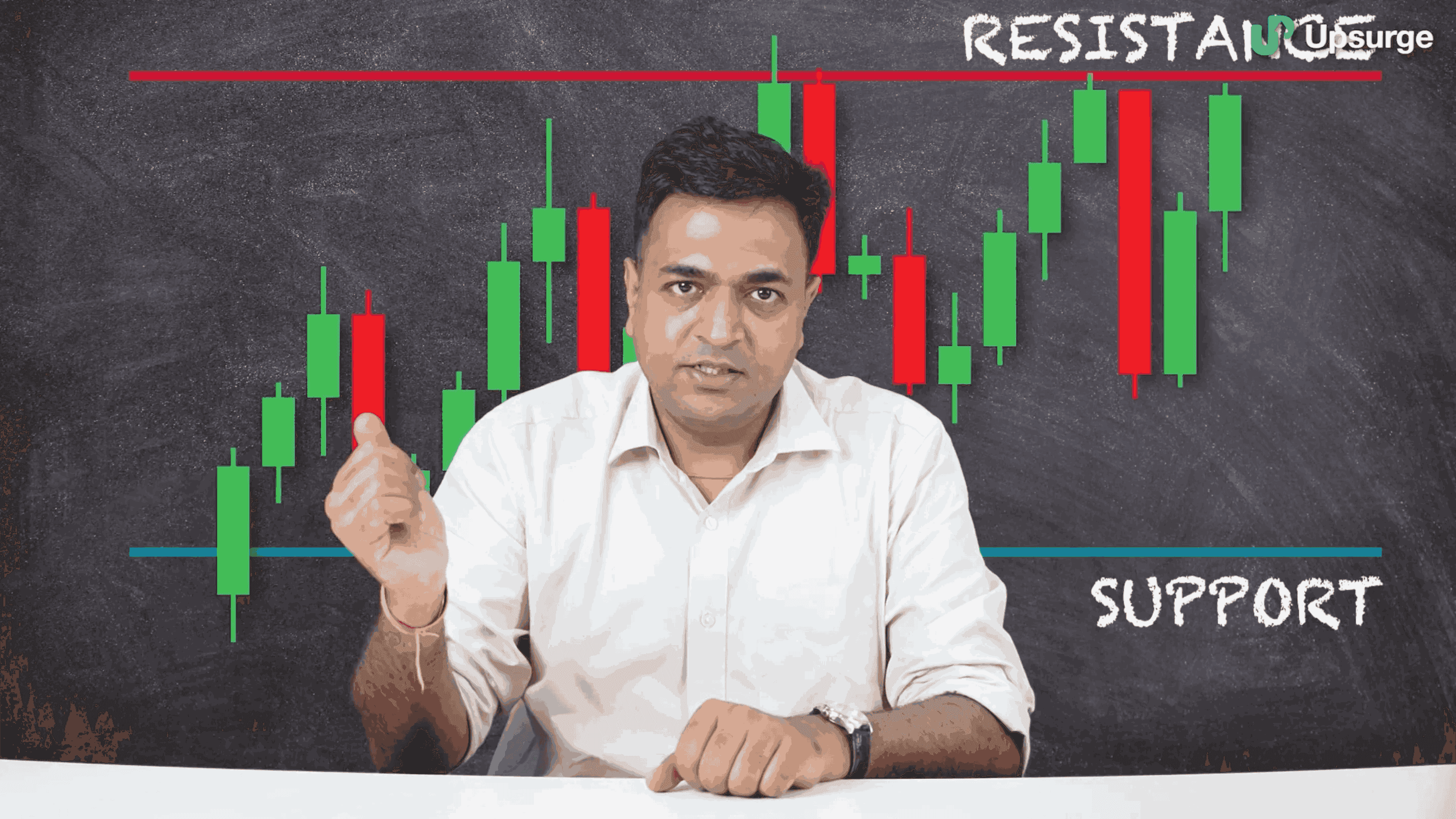
Drawing support and resistance like guesswork. Most traders draw random horizontal lines based on one bounce or one rejection. Real support and resistance levels are areas, not lines, and they need multiple touches and proper volume to be meaningful. Without this, your levels are decorative, not useful.
Entering on a single candle. A bullish engulfing candle on a 5-minute chart does not mean buy. A doji at resistance does not mean reversal. Candles need context. They need the trend, the volume, and the level around them to make sense. Most beginners take the candle as the signal itself.
Ignoring the higher timeframe. A trader looking at a 5-minute chart sees a beautiful breakout. They buy. They get stopped out in 20 minutes. Why? Because the daily chart showed a major resistance right above. They were trading against the bigger picture.
Confusing chart patterns with magic. Head and shoulders, double top, cup and handle. These patterns exist, but they are probabilistic, not guaranteed. Most traders learn the name of the pattern and forget to learn when it actually works and when it does not.
If any of these sound familiar, the issue is not that you are bad at trading. The issue is that you were never taught technical analysis the way it should be taught.
What you will actually learn
The goal of these courses is to give you a clear framework for reading any chart, on any timeframe, on any instrument. By the end, you will not need 10 indicators. You will look at a chart, identify the trend, spot the level, wait for the trigger, and take the trade with full clarity.
Price action as the foundation. Before any indicator, you learn how to read raw price. What does it mean when price keeps making higher highs? What does it mean when a candle has a long upper wick on heavy volume at resistance? You will learn to read the market's intent from the candles themselves.
Real support and resistance. Not random lines. Proper zones identified by multiple touches, volume confirmation, and timeframe alignment. You will learn how to mark levels that institutions actually respect, not the ones drawn by retail YouTube traders.
Candlestick patterns that matter. Out of dozens of patterns, only about 8 to 10 are reliable. We focus on those: pin bars, engulfing patterns, inside bars, morning and evening stars. You learn where to look for them, what timeframes they work best on, and which ones to skip entirely.
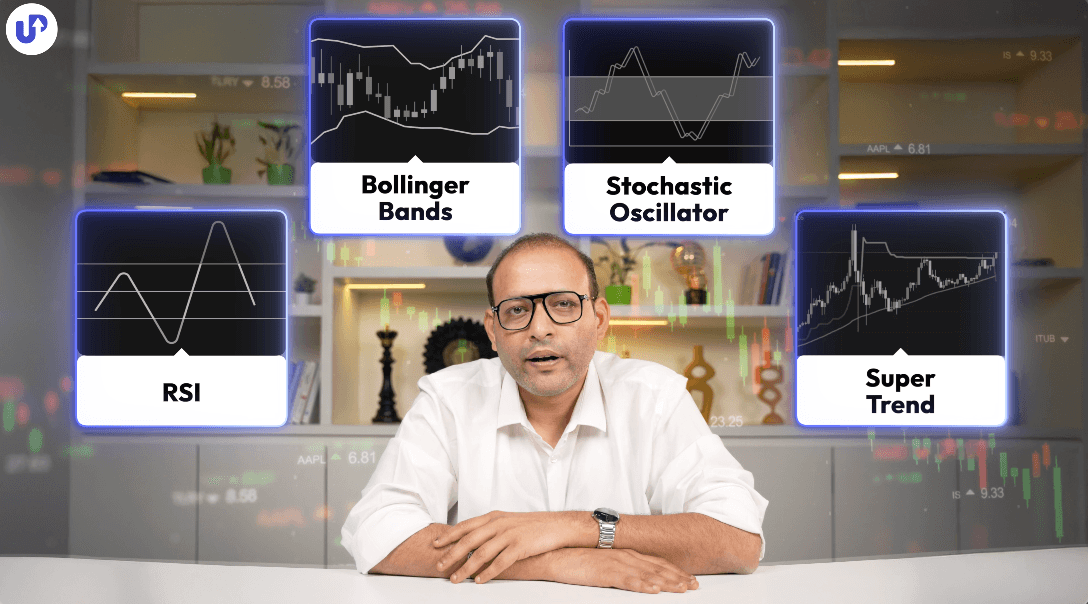
Indicators used the right way. Indicators are confirmation tools, not signal generators. You learn when RSI divergence is meaningful and when it is just noise. When MACD crossover matters and when it lags too much. When moving averages act as support and when they get sliced through. Less indicators, used better. For traders who want to apply this in live setups, our [trading strategies courses](https://www.upsurge.club/courses/trading-strategies) bundle these ideas into complete systems.
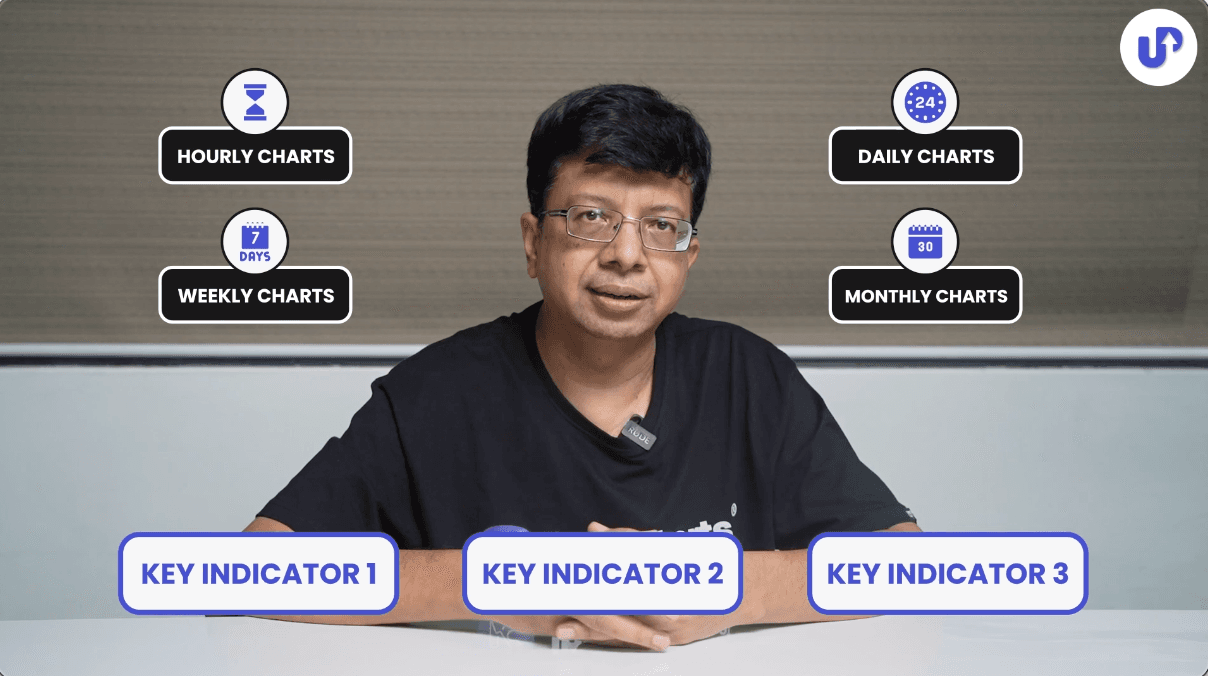
Multi-timeframe analysis. Daily for trend, hourly for setup, 15-minute for entry. You will learn how to stack timeframes so your trades align with the bigger picture. This single skill alone separates consistent traders from those who get whipsawed every day.
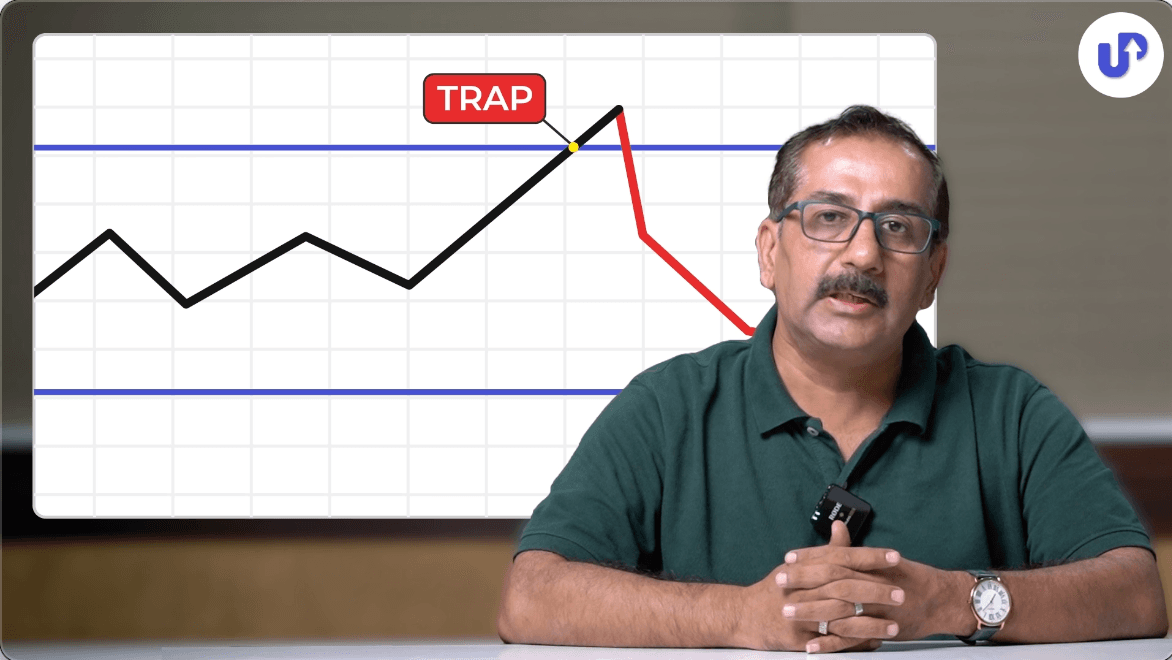
Volume analysis. Most retail traders ignore volume entirely. Professional traders treat it as the most important confirmation tool. You will learn how to read accumulation, distribution, breakouts on real volume, and fake breakouts that drain your account.
If you are a complete beginner
If you have never opened a chart in your life, do not worry. The beginner-level technical analysis courses on this page start with the absolute basics: what a candlestick is, what the colours mean, how to read time on the x-axis and price on the y-axis. We then build up to trend, levels, and patterns step by step.
Before going deep into charts, beginners often benefit from understanding how the stock market works in general. Our [stock market courses for beginners](https://www.upsurge.club/courses/stock-market-basics) cover demat accounts, brokers, and how Sensex and Nifty work. Combine that with a beginner technical analysis course and you will have a complete foundation in under a month.
For Hindi learners, several technical analysis courses are also available in Hindi. You can browse our full list of [stock market courses in Hindi](https://www.upsurge.club/courses/stock-market-in-hindi).
If you are already trading
If you already trade but feel your entries and exits are inconsistent, the intermediate and advanced courses on this page will tighten everything up. You will move from "I think this looks good" to "I have a checklist, and this setup meets it." That shift is where consistency starts.
Active traders also benefit from learning psychology and discipline alongside technical analysis. Charts give you setups. Psychology decides whether you actually execute them properly. Our [trading psychology courses](https://www.upsurge.club/courses/trading-psychology) are a perfect pairing.
Many learners also combine technical analysis with [options trading courses](https://www.upsurge.club/courses/options-trading), because most options entries rely heavily on chart reading for timing.
Who teaches our technical analysis courses
The instructors on Upsurge.club are not chart influencers or YouTube personalities. They are full-time traders and SEBI-registered professionals who use technical analysis in their daily work. They have traded through bull markets, bear markets, and sideways years. They have seen which setups actually repeat and which ones are just textbook stories.
Our technical analysis courses are built specifically for Indian markets. The examples are from Nifty, Bank Nifty, and well-known Indian stocks. The platforms shown are TradingView, ChartIQ, and the ones supported by Indian brokers. None of this is translated from US trading material that does not apply to NSE.
How the courses are structured
All courses are online and self-paced. Watch them at your own speed. Most learners finish a beginner course in 2 to 3 weeks. Intermediate courses take 4 to 6 weeks of consistent practice. The full technical analysis journey, from basics to advanced multi-timeframe analysis, can be completed in 2 to 3 months if you take it seriously.
Courses start from just ₹199. Upsurge.club PRO gives you access to 70+ courses across categories and free live webinars. Every course comes with a signed completion certificate from the instructor.
If you want to apply your chart reading to specific styles, look at [swing trading courses](https://www.upsurge.club/courses/swing-trading), [intraday trading courses](https://www.upsurge.club/courses/intraday-trading), or [scalping trading courses](https://www.upsurge.club/courses/scalping-trading) once your foundation is solid.
Frequently asked questions about technical analysis
Does technical analysis really work? Yes, when used correctly. The problem is that most traders use it poorly. Done right, technical analysis is one of the most powerful tools available to retail traders. Done wrong, it becomes the reason they lose.
Do I need to know all candlestick patterns? No. Only 8 to 10 patterns are worth learning. The courses focus on these.
Will this work for both intraday and swing trading? Yes. Technical analysis concepts apply across all timeframes. The principles are the same whether you are looking at a 5-minute chart or a weekly chart.
Which is better, technical analysis or fundamental analysis? They serve different purposes. Technical analysis is for timing entries and exits. Fundamental analysis is for picking which company to invest in. Most successful traders use both. For fundamental skills, see our [stock market investing courses](https://www.upsurge.club/courses/stock-market-investing).
Which charting platform should I use? TradingView is the most popular for Indian traders. The courses demonstrate setups on TradingView and similar tools. You can also see our [trading tools courses](https://www.upsurge.club/courses/trading-tools) for help on Chartink and other platforms.
What changes when you learn this properly
The biggest change is that charts stop feeling random. You will look at a stock chart and immediately see what is happening: trend, key levels, current setup, and whether it is worth trading or not. The fear of missing out reduces, because you know that good setups repeat every week. You stop chasing trades. You wait for them.
Your win rate may not jump overnight, but your losses become smaller and more controlled. Your winners get bigger because you stop exiting at the first sign of profit. Your screen time reduces. Your sleep improves. You start trading with a checklist, not with hope.
This is what proper technical analysis gives you. Not certainty, but clarity. Not signals, but a system. Pick the course on this page that matches your current level and start. In a few weeks, the charts that confused you will start telling you a story you can actually understand.